
Handyman Electrical Repair in the Phoenix Area
We handle the common electrical jobs around the house: swapping fixtures, hanging ceiling fans, replacing outlets and switches, and installing doorbells and smart devices.
What We Do
- Ceiling fan installation
- Light fixture replacement
- Outlet and switch replacement
- GFCI outlets
- Doorbells and smart devices
- Recessed light trim and bulbs
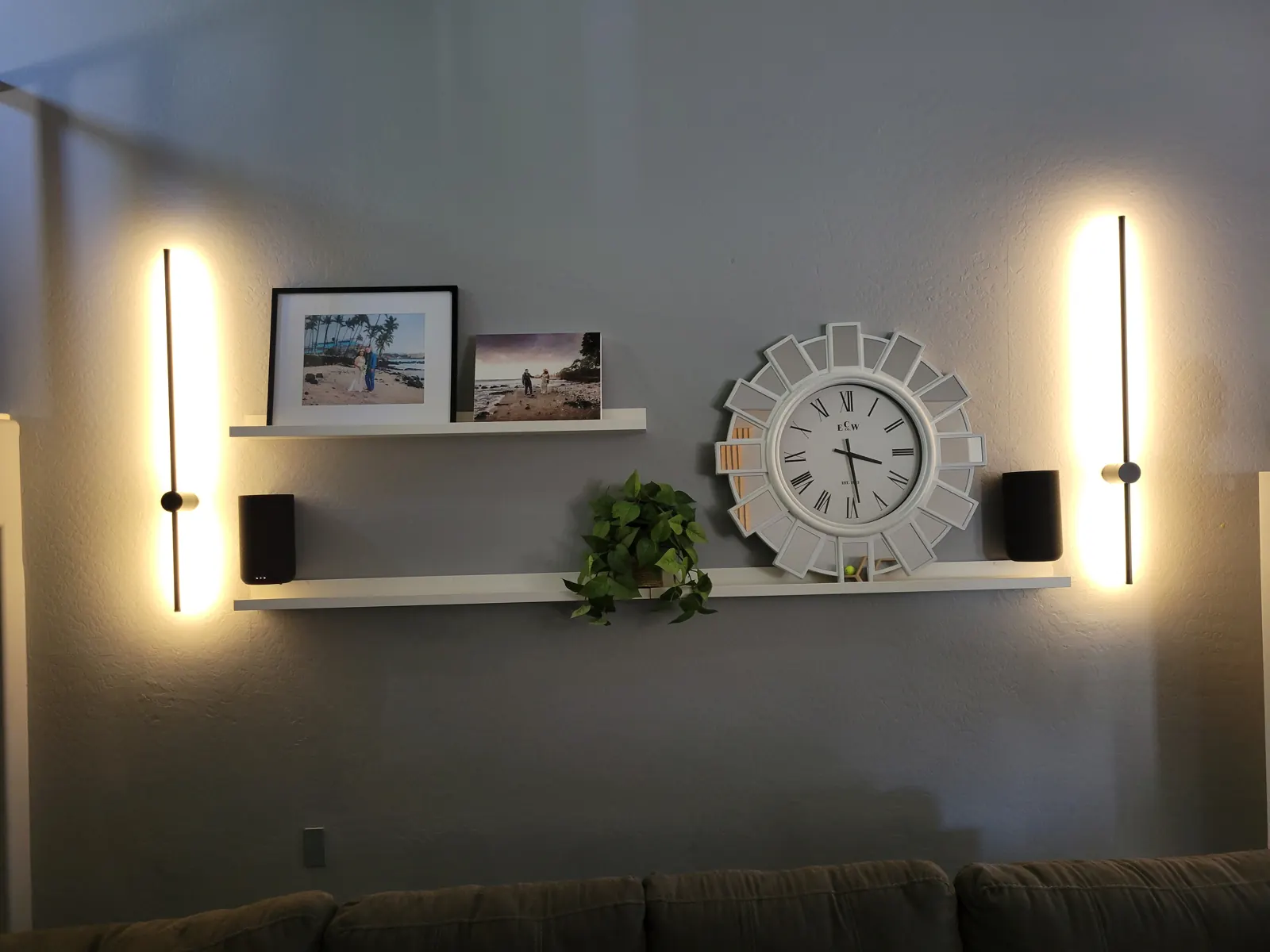
Electrical work is where a handyman's limits matter most, so we will be direct about both what we do and what we pass along. Swapping a fixture, hanging a fan, replacing a worn outlet or installing a smart device is routine when done carefully. This guide covers how we approach those jobs, what the Arizona climate does to them, and the point where an electrician is the right call.
Signs a device or fixture needs replacing
Many electrical annoyances are worn devices rather than wiring problems. A plug that falls out of the outlet, a switch that crackles or feels warm, a light that flickers only when you touch the fixture, or a fan that wobbles all point to a part that is worn out or loosely installed.
Some signs call for stopping use immediately. A burning smell, scorch marks around an outlet or switch, a breaker that trips repeatedly, or an outlet that sparks when something is plugged in should be treated as urgent. Stop using that circuit, and do not keep resetting a breaker that keeps tripping.
- Outlets that feel warm or hold plugs loosely
- Switches that buzz, crackle or feel hot
- Fixtures that flicker or dim with no bulb problem
- Ceiling fans that wobble or hum
- Outlets in kitchens, baths or garages with no test and reset buttons
How we install a fixture, fan or device
Safety comes first and it is not negotiable. We turn off the circuit at the panel, then confirm with a tester that the wires are actually dead rather than trusting a label. Mislabeled breakers are common, so the test is what matters.
We then inspect what is behind the device: the condition of the wires, the box, and the connections. A fan needs a box rated to carry its weight and motion, and that is checked before the fan goes up, not after. We make the connections properly, secure the device, restore power, and test it under use. For fans we balance the blades and tighten everything so there is no wobble.
Last, we leave things tidy and label what we changed if it helps. If we found anything outside our scope, we explain what we saw and what an electrician would need to look at.
A few details separate a neat install from a risky one. We match the device to the load and to the location, so a damp-rated fixture goes outside and a properly sized dimmer goes with the bulbs it is meant to control. We check that the cable is not pinched against the box edge, that grounding is connected where the device calls for it, and that nothing is crowded into the box. These steps take minutes, and they are the ones most often skipped when the job is rushed.
Arizona conditions that affect electrical devices
Heat and sun are rough on outdoor fixtures. Plastic housings go brittle, seals fail, and moisture and dust get in. Patio and porch lights and exterior switches need to be rated for outdoor use, and the gasket and sealant at the box matter just as much as the fixture itself.
Attic and garage heat age wiring insulation and devices faster than conditioned space does. Monsoon storms bring surges and power blips, and dust finds its way into exterior outlets. GFCI outlets, which are designed to cut power quickly when a fault is detected, are commonly used in damp or outdoor locations, and they wear out and should be tested periodically using their built-in test button.
Common mistakes and risks of doing it yourself
The riskiest mistake is working on a circuit that is still live, usually because the wrong breaker was switched off. The next is a loose connection, which may work for months and then heat up. Wire nuts that are not tightened, wires nicked while stripping, and devices crammed into a small box all create problems that are hard to see.
Other frequent errors include hanging a heavy fan from a box meant only for a light, mixing up line and load terminals on a GFCI, and using a fixture not rated for damp locations outdoors. Many homes also have older wiring that does not match what the new device expects, which is a good moment to stop and ask for help.
If you are tempted to try it yourself anyway, at minimum use a non-contact tester, test twice, and stop the moment you find something that does not match what you expected: scorched insulation, aluminum-colored wire, or extra wires you cannot account for. That is the point at which a second opinion is cheaper than a guess.
What affects the price of an electrical job
The cost depends on the number of devices, the accessibility of the boxes, and the type of device. A ceiling fan on an existing, fan-rated box is simpler than one that needs a new support. High ceilings need more setup. Condition of the existing wiring and boxes, whether you provide the fixtures, and whether we are replacing a device one for one or changing its location all shape the quote.
Grouping several small jobs in one visit is almost always more efficient than separate trips, so send us the list.
How to prepare for the visit
Have fixtures purchased and on hand if you are supplying them, along with instructions and any hardware. Clear the area under ceiling work. Tell us about any problems you have noticed, such as a breaker that trips or a switch that sometimes fails, since that information changes what we check. If you know where your panel is, make sure we can reach it.
A short note on where the problem occurs helps more than you might think: which room, what time of day, and what was running when it happened. Intermittent problems are the hardest to chase, and your observations often point us straight to the cause.
When an electrician is the right call
Panel upgrades, new circuits, rewiring, aluminum wiring concerns, repeated breaker tripping, and anything involving the service entrance belong to a licensed electrician. Some work also requires a permit. We will tell you when a job crosses that line, and we are happy to handle the fixtures, drywall patching or painting that may follow once the electrician has finished.
Electrical Repair Near You
Pick your city to see how we handle electrical repair there.
Common Electrical Repair Jobs
Frequently Asked Questions
Do you install ceiling fans?
Yes. We install ceiling fans, including swapping a light fixture for a fan when the box is rated for it. If it is not, we will tell you what is needed.
What electrical work is outside what you do?
Panel upgrades, new circuits and rewiring need a licensed electrician. We stay with fixtures, devices and straightforward repairs.
Can you replace a light fixture with a ceiling fan?
Often, yes, if the existing box is rated to support a fan. If it is not, the box needs proper support first. We check before we start and explain the options.
Why does my light flicker?
Common causes are a loose bulb, an incompatible dimmer, a worn switch or a loose connection. We check the simple causes first and will tell you if the pattern points to something a licensed electrician should assess.
What is a GFCI outlet and do I need one?
It is a protective outlet that cuts power quickly when it detects certain faults, and it is commonly used in kitchens, baths, garages and outdoors. If yours does not reset or test properly, we can replace it.
Can you install a smart doorbell or thermostat?
Smart doorbells and many smart switches are routine installs. For thermostats, we check compatibility with your system first and tell you if an HVAC specialist should handle it.
Recent Work Around the Valley

Ready to check one more thing off your list?
Free estimates. Upfront pricing. 100% satisfaction guaranteed.