
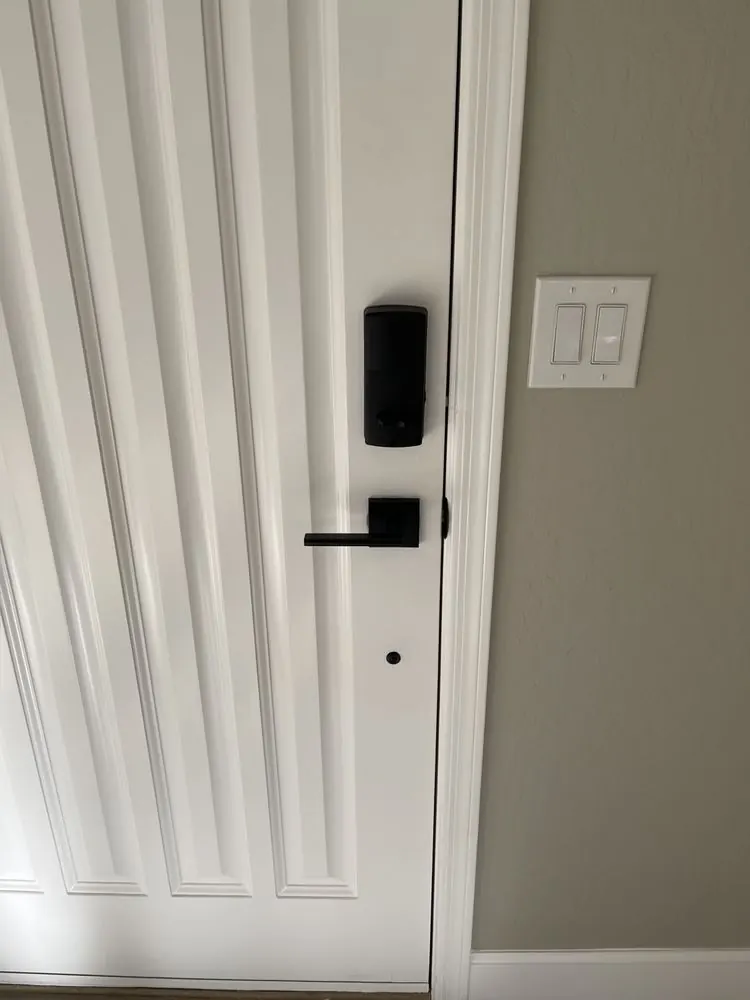
Photos from our own jobs. See more of our work.
What the job involves
Installing a security door is mostly about fit. The frame has to sit square against the existing door casing, the door has to swing without rubbing, and the lock has to line up with the latch plate every time. A door that is off by an eighth of an inch will bind in summer and refuse to latch in winter, so the measuring matters more than the hardware.
Before we hang anything we look at the surface the frame will mount to. Wood casing, stucco returns, and metal frames each take different fasteners, and we need solid material behind the screws, not just trim or soft stucco.
- Whether the opening is square, plumb, and the same width at the top and bottom
- Condition of the casing or jamb the frame will anchor into
- Which way the main door swings, so the two do not collide
- Threshold height and any slope in the slab
Why it matters in Arizona
Most Valley homeowners want to use the evening cool-down. Once the sun drops, opening the front door and letting the house breathe is one of the cheapest ways to cut air conditioning use, but only if the door you are leaving open is locked. A security door makes that safe.
Arizona sun is also hard on exterior doors. Powder-coated steel holds up well, but cheap finishes chalk and fade, and plastic parts go brittle. We pay attention to the hinge and closer hardware because heat is what usually fails first, long before the frame does.
How a visit goes
We come out, measure the opening in several places, and talk through the style you want: full-view, mesh, or decorative. If you already bought a door, we check that it matches your opening before we start. If not, we can tell you what size and swing to order.
On install day we remove the old screen door if there is one, set the new frame, shim it plumb, and anchor it through the shims so it cannot twist. Then we hang the door, adjust the closer so it shuts firmly without slamming, set the lock and strike plate, and test it several times. We finish by caulking gaps at the frame and cleaning up.
What affects the cost
The biggest factors are the door itself, the condition of the opening, and any prep work. A square, solid opening with an off-the-shelf size is the simple case. A custom size, a crooked frame, or rotted trim means more time and sometimes carpentry before the door can go on.
Removal and disposal of an old door, painting or touching up the surrounding trim, and the lock type you pick also change the number. We give you an upfront price after we see the opening, and the estimate is free.
When it needs a specialist
If you want an alarm contact, electric strike, or access control tied into the door, that is a job for a security or low-voltage contractor. If the main door frame itself is damaged or the opening needs to be reframed, we will tell you before we start rather than hang a security door on a bad base. Anything structural, such as widening an opening, is a separate project.
“Nathan did a great job of cutting and finishing the exterior wood beams on my home. He remove the rotted wood and sealed and painted and they look so much better. He worked in the blazing sun without complaint, nice guy and talented craftsman. Highly...”